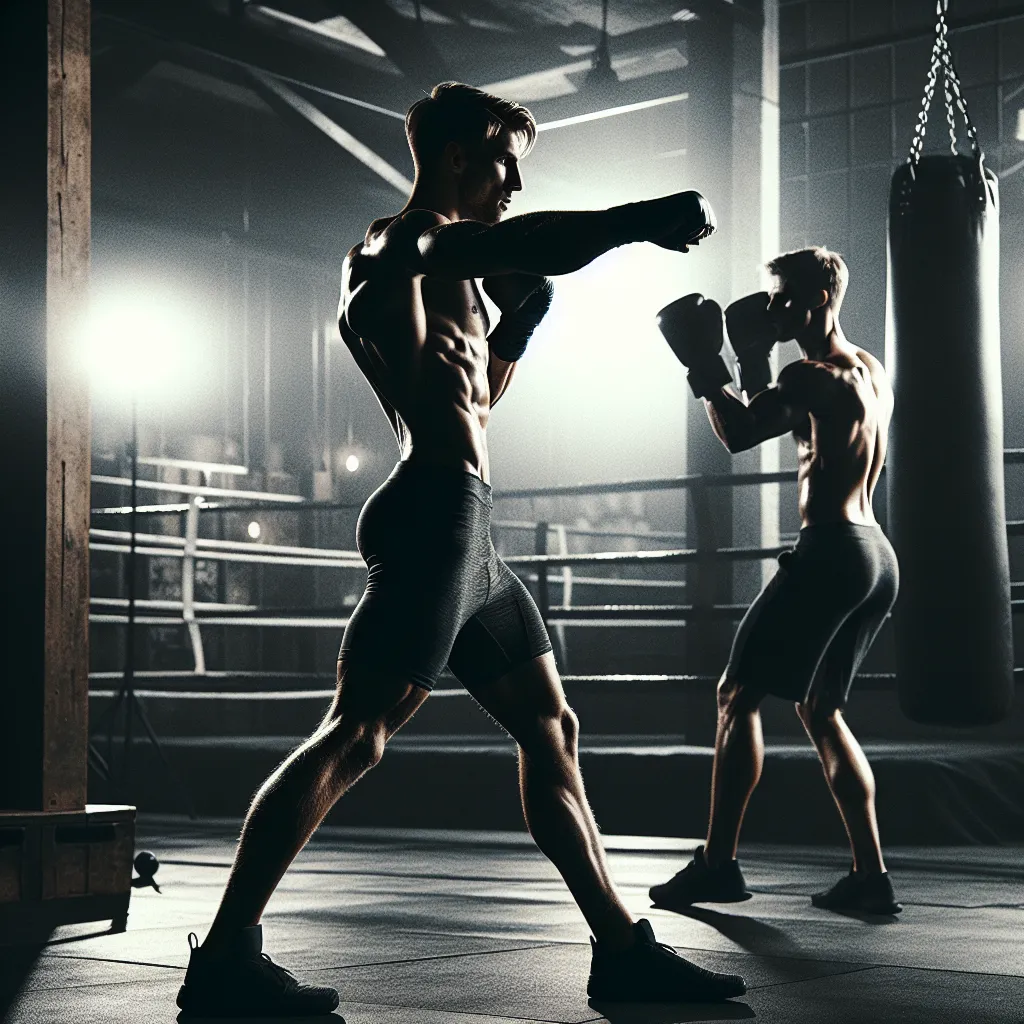
If you want to learn how to throw a jab properly, forget everything you think you know about punching. The jab isn’t an arm movement. It’s a whole-body movement that starts at your feet, travels through your hips, and ends at your knuckles.
Most beginners treat the jab as straightening the arm — bent to straight, over and over. That’s a push, not a punch. A real jab snaps like a wet towel. It pops. And the retraction back to your chin is quicker than the way out.
This guide breaks down the jab from stance to finish position, covers the mechanics that generate snap and power, and gives you specific drills to make your jab sharp. If you’re working through your first boxing combinations, the jab is where it all starts.
Why the Jab Is the Most Important Punch in Boxing
The jab does more jobs than any other punch. It measures distance, disrupts timing, sets up power shots, controls the pace, and keeps opponents guessing. Fighters who ignore their jab struggle with everything else.
But here’s what beginners miss — there isn’t just one jab. There are several types, each with a different purpose:
- The stiff jab — planted, full extension, meant to snap the head back
- The flick jab — light and fast, used to gauge distance or get a reaction
- The power jab — stepping in with body weight behind it
- The getting-out jab — thrown while moving backward to create space
- The setup jab — almost a slap, used to occupy vision before a power shot
When you first start, it’s just extending your lead hand. That’s fine. But as you develop, the jab becomes a tool with multiple applications. Understanding that there’s more than one way to throw it is the first step toward making it useful.
How to Throw a Jab: Step-by-Step Mechanics
Here’s the full sequence. Every part matters.
1. Start in Your Stance
Feet shoulder-width apart. Lead foot forward (left foot for orthodox, right for southpaw). Knees slightly bent. Weight distributed evenly, with a slight bias toward your back foot. Hands up at cheekbone height. Elbows tucked to your ribs.
Your stance is your base. If it’s wrong, nothing that follows will work.
2. Initiate With Your Hips
This is the part most beginners skip entirely. The jab doesn’t start with your arm — it starts with your hips.
Rotate your hips toward your lead side. For orthodox fighters, that’s a clockwise rotation when viewed from above. For southpaw, anticlockwise. The rotation doesn’t need to be dramatic — it’s a quick, sharp snap.
Here’s the test that tells you if you’re doing it right: at full extension, have someone push against your outstretched arm. If your hips are locked out and fully rotated, you’ll feel solid. Immovable. Your body should be able to resist the push without twisting back. If you fold or rotate when they push, your hips aren’t locked. You’re arm-punching.
3. Let the Shoulder Pop Forward
As your hips rotate, your lead shoulder naturally pushes forward. Don’t force it — let the hip rotation drive it. The shoulder extending adds reach and protects your chin on that side.
The sequence has to flow in the right order: hips first, then shoulder, then arm. Some beginners twist their hips because they’ve been told to, but the movement doesn’t flow sequentially. They do everything at once, which kills the snap. Think of it as a chain reaction — each part triggers the next.
4. Extend the Arm and Rotate the Fist
Your arm extends straight out, not in an arc. The punch travels the shortest distance between your chin and the target. As you reach full extension, rotate your fist so the palm faces down. This aligns your knuckles and adds a sharpness to the impact.
Your lead eye (left for orthodox, right for southpaw) should be staring straight down your knuckles at the target. Like looking down the barrel of a gun. That alignment keeps the punch straight and accurate.
5. Tense at the Last Possible Second
Stay loose throughout the entire punch. Fists unclenched, shoulders relaxed, arm soft. Only tense your fist at the moment of impact — that last inch before contact.
Beginners clench their fists from the start. That constant tension builds lactic acid in your forearms and shoulders. You gas out faster, your punches slow down, and everything gets stiff. Loose until impact. Tight for a split second. Then loose again.
On some jabs — a flick jab to set something up, for example — you might not even tense at all. You’re just tapping them, occupying their vision, making them react.
6. Retract Faster Than You Extended
This is the part everyone forgets. The retraction matters as much as the extension.
Snap your hand back to your chin — fast. Faster than it went out. A jab that lingers at full extension is a jab that gets you countered. Your opponent sees the arm hanging out there and throws over it.
Think of it as a complete cycle: out-snap-back. One motion. Not out… pause… back. The pause is where you get hit.
The Shield and Spear: How to Stay Protected While Jabbing
Your non-punching hand has a critical job. While your jab extends, your rear hand stays glued to your chin. Elbow tucked tight to your rib cage. You want to be a small target.
Think of your body as a shield. Frame it tight — chin tucked behind your lead shoulder, rear hand protecting the other side, elbows covering your ribs. Your jab is the spear. It shoots out from behind the shield and comes back.
This is where beginners get caught. They focus so hard on the jab that the rear hand drops. Or the chin lifts. Or the elbow floats away from the body. One jab thrown with a dropped guard is an invitation for a counter hook.
Every time you throw the jab, check: is my rear hand still on my chin? Are my ribs still covered? If yes, throw another one. If no, fix it before you throw again.
Why Your Jab Feels Weak (And How to Fix It)
If your jab has no pop, the problem is almost never your arm strength. Check these three things in order.
Check Your Foot Position First
Your stance determines everything. If your weight is sitting too far forward on your lead leg, you’ve got nothing to push off from. The jab needs your weight transferring forward — which means it has to start on the back foot.
Set up in your stance. Feel where your weight sits. If it’s 50/50 or leaning forward, shift it so your back leg carries slightly more. Now when you jab, you’re driving your weight into the punch instead of punching from a position where the weight has already moved.
Check Your Hip Rotation
If your hips aren’t locking out at full extension, you’re leaving power on the table. The lockout is what transfers the force from your legs and core through to your fist.
At full extension, your hips should be rotated as far as they naturally go. You should feel stretched and solid — extended as far as possible without overextending. That’s the sweet spot. Short of lockout and you’re pushing the punch. Past it and you lose balance.
Step Into It for Power
If you want a truly heavy jab — the kind that makes someone respect your range — step into it. As you throw, your lead foot slides forward a few inches. Your body weight follows the punch.
This isn’t for every jab. Flick jabs and setup jabs don’t need it. But when you want to plant someone’s head back and make them think twice about walking forward, step in. Close the distance. Get your weight behind it.
Jab Drills You Can Do at Home
Mirror Drill (Form Focus)
Stand in front of a mirror. Throw single jabs at half speed. Watch your hip rotation, shoulder extension, fist rotation, and retraction. Are your hips snapping? Is your rear hand staying up? Does the fist rotate at the end?
Do 3-minute rounds of slow, single jabs. Ten per minute. Quality over quantity. Fix one thing per round.
Wall Touch Drill (Range Calibration)
Stand at arm’s length from a wall. Throw jabs so your knuckles just barely touch the surface. This teaches you the exact distance of your full extension without overreaching. If you’re falling into the wall, you’re too close. If you can’t reach, step in.
Speed Retraction Drill
Throw jabs focusing only on how fast the hand comes back. Ignore power entirely. The goal is making the return trip faster than the outgoing trip. Set a 3-minute round and throw 50-60 jabs, pulling each one back as fast as physically possible.
Double and Triple Jab Rounds
Once your single jab is clean, throw them in pairs and triples. These drills fit naturally into a shadow boxing workout at home — dedicate your first round entirely to jab work. Double jab — vary the speed (first one light, second one harder). Triple jab — two high, one to the body. This builds rhythm and teaches you that the jab has different applications within a single sequence.
Frequently Asked Questions
How do I make my jab faster?
Relax. A tense arm moves slower than a loose one. Keep your fist unclenched until the moment of impact. Focus on the retraction — pulling the jab back fast trains the same muscles that make it go out fast. Speed comes from relaxation and repetition, not from trying to throw harder.
Should I rotate my fist when I jab?
Yes. Rotate your fist so the palm faces down at full extension. This aligns your two big knuckles (index and middle finger) with the target and adds snap. Some jabs — like a quick flick to measure distance — might not rotate fully, but for standard technique, rotate.
Why does my shoulder hurt after jabbing?
You’re probably arm-punching. If your hips aren’t generating the force, your shoulder and arm do all the work. That leads to fatigue and soreness. Focus on initiating with your hips and letting the shoulder extension happen naturally from the rotation. Also check that you’re not shrugging your shoulder up when you punch — keep it natural.
How many jabs should I throw per round?
Quality beats quantity. A beginner should aim for 30-40 clean jabs per 3-minute round during dedicated jab work. As technique improves, that number climbs naturally. A pro might throw 80+ per round in shadow boxing, but every single one has purpose. If you want structured rounds with real-time cues, a combo-calling app can keep you throwing instead of standing around thinking.
What’s the difference between a jab and a cross?
The jab comes from your lead hand (front hand). The cross comes from your rear hand (back hand). The jab is faster but carries less power. The cross is slower but hits harder because of the longer rotation path. Together as a 1-2, they’re the foundation of boxing combinations.
The jab is your most versatile weapon. Drill it until it’s automatic, test it against the wall, film it in the mirror. When it snaps instead of pushes, when it comes back faster than it goes out, when you stop thinking about it and start using it — that’s when your boxing changes.