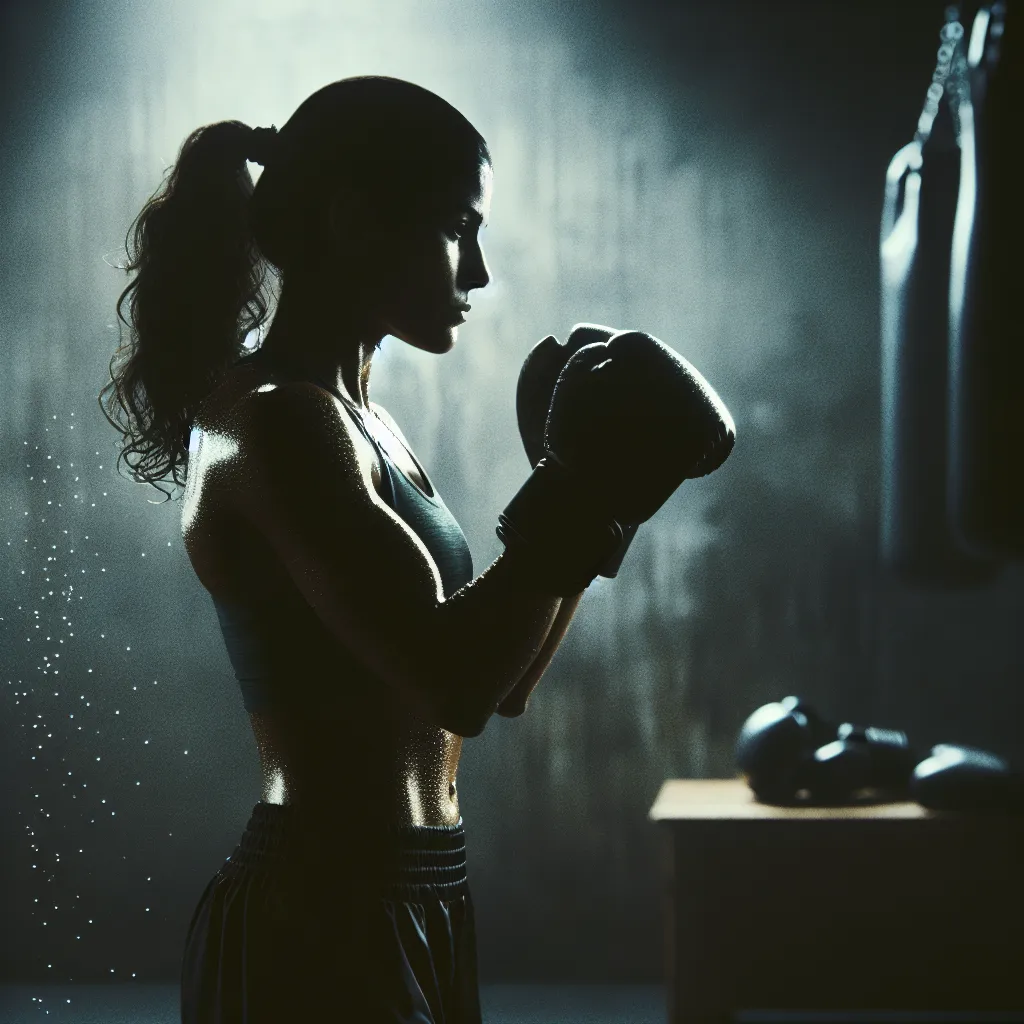
A shadow boxing workout at home is one of the most effective ways to sharpen your boxing skills without a gym, a bag, or a partner. All you need is enough floor space to move and a round timer.
But here’s what separates a real session from just waving your arms around: structure. You build each round on the last one. Start slow, add punches progressively, and by the final rounds you’re running full fight simulations in your living room.
This guide gives you a complete, followable shadow boxing workout you can do today. Every round has a focus, and every focus has a purpose. If you’re new to boxing combinations, start there first — this workout assumes you know the basic numbering system (1 = jab, 2 = cross, 3 = lead hook, and so on).
What You Need Before Starting
Space: Enough room to take two steps in any direction. A living room, garage, or bedroom with the furniture pushed back works fine.
Timer: Any round timer app or a basic phone timer. Set 3-minute rounds with 1-minute rest. If you want to push your conditioning, increase the round time to 4 minutes or cut the rest to 30 seconds.
Footwear: Barefoot on carpet, or flat-soled shoes on hard floors. Running shoes with thick soles mess up your pivoting.
That’s it. No gloves, no bag, no wraps. Shadow boxing strips the sport down to movement, timing, and form.
The Warm-Up: Don’t Skip This
Throwing punches cold is a fast way to tweak a shoulder or strain a muscle. Spend at least one full round warming up before you start working.
Move around your space. Roll your shoulders forward and back. Shake your arms loose. Bounce lightly on your toes. Get your heart rate up gradually. Some people need a full round just shaking out. Others warm up faster because they’ve done some stretching or skipping beforehand. Either way, don’t throw real punches until your shoulders feel loose and your breathing has picked up.
If you’re properly warmed up, the first working round should feel smooth, not stiff.
Round 1: Jabs Only (3 Minutes)
The first working round is jabs and nothing else. This might sound boring. It’s not.
Move around your space in your boxing stance. Throw single jabs — focus on hip rotation, fist snap, and fast retraction. If your jab technique needs work, this is where you clean it up.
What to cycle through:
- Stationary jabs — plant your feet, throw 5-6 clean jabs
- Jabs while moving forward — step and jab, keeping your stance intact
- Jabs while moving backward — retreating jabs to create distance
- Defensive jabs — throw a jab, then immediately slip or roll as if a counter is coming back
Don’t rush. This round is about warming up your lead hand and getting your feet connected to your punches. If you’re throwing lazy jabs, the rest of the workout will be lazy too.
Intensity: 40-50%. Technique focus. No power shots.
Round 2: Straight Shots and Defence (3 Minutes)
Now add the cross. Work the 1-2 (jab-cross) and the 1-1-2 (double jab-cross). Mix in some solo 2s from range.
What to cycle through:
- 1-2 combinations with full hip rotation on the cross
- 1-1-2 with varied rhythm — don’t throw every combo at the same speed
- After every combination, defend. Slip, roll, or step off at an angle. Imagine the punch coming back. If you threw a 1-2, picture the counter hook and roll under it.
This is where shadow boxing separates from just punching air. You’re not only throwing offence — you’re imagining responses. What would you do if that combo came at you? How would you defend it? Shadow those defensive moves after every combination.
Intensity: 50-60%. Starting to commit to your shots but still controlled.
Round 3: Hooks Enter the Mix (3 Minutes)
Third round, bring in the hooks. Now you’ve got jabs, crosses, and hooks to work with — that’s your 1-2-3 and its variations.
What to cycle through:
- 1-2-3 (jab-cross-hook) — the bread and butter three-piece
- 1-3 (jab-hook) — throw the hook off the jab without the cross
- 3-2 (hook-cross) — lead with the hook for variety
- Double up on hooks — 3-3 (lead hook, lead hook) or 3-4 (lead hook, rear hook)
Start working different levels. Throw a 1-2-3 to the head, then a 1-2-3b to the body. Make your imaginary opponent guess where the next shot is coming.
Defence is still woven into every sequence. Throw a combo, move your head, reset. Throw another combo from a different angle.
Intensity: 60-70%. You should be breathing harder. Shoulders starting to work.
Round 4: The Full Arsenal (3 Minutes)
Everything is available now. Straights, hooks, uppercuts, body shots. All six punches, all levels.
What to cycle through:
- 1-2-5 (jab-cross-uppercut) — change levels going up
- 1-2b-3 (jab-body cross-hook) — change levels going down then up
- 1-2-3-2 (jab-cross-hook-cross) — four-piece flowing combination
- Any combo from the fundamentals guide thrown with conviction
This round is about creativity. Throw combinations you’ve drilled. Mix them up. Change the order, change the speed, change the power. Every combo should feel like a complete thought — you throw, you defend, you reset, you go again.
The key here: don’t just go through the motions. Visualise an opponent in front of you. Picture their reactions. If you throw a 1-2, imagine them leaning away from the cross — that tells you the lead hook (3) is open. If they cover up high, the body shot is there. Your shadow boxing should feel like problem-solving, not choreography.
Intensity: 70-80%. Working hard. Sweat should be showing.
Rounds 5-6: Fight Simulation (3 Minutes Each)
These final rounds are where you push yourself. Pick a scenario for each round and commit to it.
Scenario Options:
Pressure fighter round: You’re moving forward the entire round. Cutting off the ring. Throwing high-volume combinations. Jab, jab, step forward, 1-2-3, cut the angle. Don’t let your imaginary opponent breathe.
Back foot round: You’re being swarmed. Your job is to move, pivot, angle, defend. Throw counter-punches off slips and rolls. This round is about composure under pressure. Jab your way out of corners. Pivot when you hit the wall.
Counter-punching round: Wait. React. Picture punches coming at you, slip them, and fire back. 1-2 incoming — slip the 1, counter with your own 2-3. This round builds timing and fight IQ more than any bag work ever will.
30-second burst round: Alternate between 30 seconds at full intensity and 30 seconds at recovery pace. This mimics the way real fights flow — exchanges of heavy action followed by moments of reset.
Intensity: 80-100%. This is where the session earns its value. If you’re not breathing hard and dripping sweat by the end, you didn’t push hard enough.
Why Shadow Boxing Hits Different at Home
Shadow boxing without a bag might seem less effective. It’s actually harder in some ways.
When you throw at a bag, the bag absorbs the force. When you throw at air, your body has to stop the punch. Your back muscles decelerate every shot you throw. After six rounds of this, your shoulders are burning, your biceps are sore, and your back is worked in a way that bag work doesn’t replicate.
Done with real intensity, a 6-round shadow boxing session should leave you nearly as drained as sparring. Exhausted, dripping sweat, but wired and alert — you’ve spent 20-30 minutes visualising fight scenarios and running full sequences.
How to Stay Sharp Without a Coach or Partner
Training alone requires a different kind of discipline. There’s no one watching, no one pushing you, no one telling you to keep your hands up. That accountability has to come from you.
Track your sessions. Write down what you did — how many rounds, what you focused on, what felt off. When you know what you did last time, you can try to beat it. On sluggish days, looking at past sessions reminds you that you’ve done it before.
Set deadlines. Even without a fight date, give yourself targets. Fight weight by a specific date. Film yourself on day 1 and day 30. Join a gym by month 3. Deadlines create urgency that “I’ll train when I feel like it” never will.
Find accountability partners. Even if you train alone, talk to people about training. “How was your session last night?” That simple question holds more power than any motivational video.
Film yourself. Watch old footage alongside new footage. The difference between where you started and where you are now is the most honest feedback you’ll get.
The Complete Shadow Boxing Workout at Home
Here’s the full session laid out for quick reference:
| Round | Focus | Combos | Intensity |
|---|---|---|---|
| Warm-up | Movement, shoulder rolls, bouncing | No punches | Light |
| Round 1 | Jabs only — stationary, moving, defensive | 1, 1-1 | 40-50% |
| Round 2 | Straight shots + defence | 1-2, 1-1-2 | 50-60% |
| Round 3 | Hooks + level changes | 1-2-3, 1-3, 3-2 | 60-70% |
| Round 4 | Full arsenal, creativity | Any combo | 70-80% |
| Round 5 | Fight scenario (pick one) | React and flow | 80-100% |
| Round 6 | Fight scenario (pick another) | React and flow | 80-100% |
Total time: ~25 minutes (including rest periods)
If you want your combos called out in real-time so you’re reacting instead of planning, a combo-calling app can run your rounds while you focus on throwing.
Frequently Asked Questions
How often should I shadow box at home?
Three to four sessions per week is a solid baseline. Shadow boxing is low-impact enough to do daily if you vary the intensity — technique-focused sessions one day, high-intensity the next. Rest at least one day per week.
Can shadow boxing replace bag work?
Not entirely. Shadow boxing develops form, footwork, timing, and fight IQ. Bag work develops power, impact conditioning, and distance management against a physical target. They complement each other. But if you only have one option, shadow boxing builds more well-rounded skills.
How do I know if I’m doing it right without a coach?
Film yourself. Watch the footage with fresh eyes the next day. Check: are your hands returning to your chin? Is your stance consistent? Are you flat-footed or bouncing? Compare your movement to fighters you respect. The camera doesn’t lie — even when your body feels like everything is perfect.
Is shadow boxing a good cardio workout?
Done with real intensity, absolutely. Six rounds of shadow boxing with full combinations, defence, and movement will have your heart rate elevated, your shoulders burning, and your lungs working. If it feels easy, you’re not putting enough into it. Treat every round like it matters.
Do I need gloves for shadow boxing?
No. Shadow boxing is best done without gloves. Your hands move faster and more naturally bare or with light wraps. Gloves add weight that changes your mechanics. Save them for the bag.
Six rounds. No equipment. No excuses. Set the timer and get moving.